What Is Wheel Alignment? Everything You Need to Know About Tire Alignment
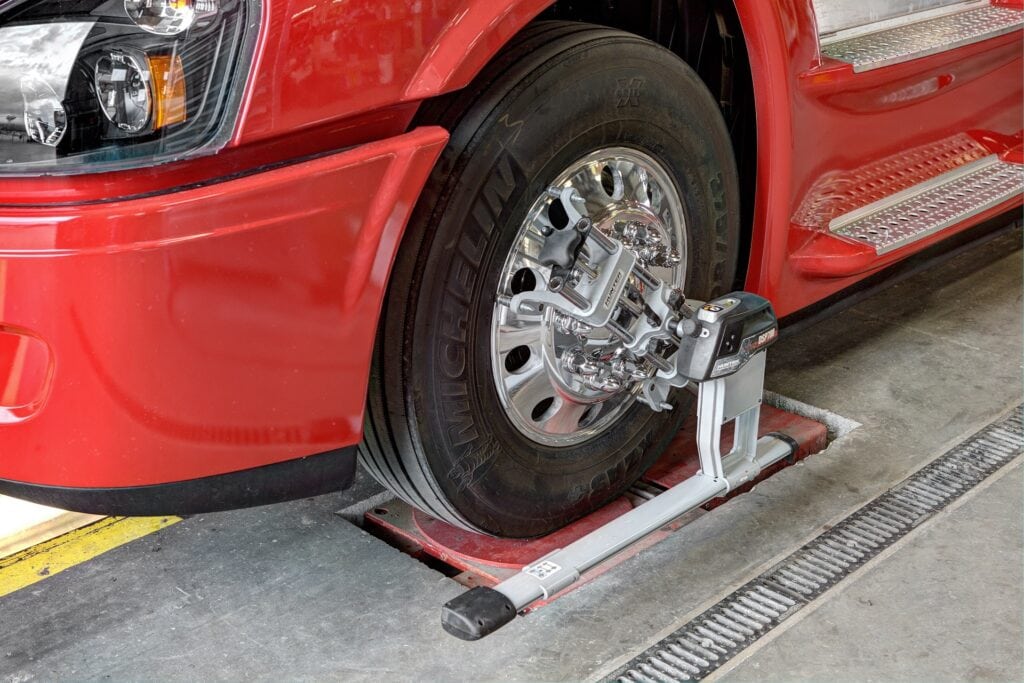
If you’re managing or driving a heavy-duty truck, understanding wheel alignment is far more than just a basic maintenance task; it’s essential for safety and performance. It’s a critical element that affects safety, tire life, fuel efficiency, and overall vehicle performance. Especially for trucks that operate under load or travel long distances, alignment problems can quickly lead to uneven tire wear and expensive repairs.
Proper truck & alignment ensures a smooth, controlled, and efficient ride, whether hauling freight across highways or navigating tight urban corners.
What Is Wheel Alignment?
Wheel alignment is the process of adjusting the angles of your vehicle’s wheels so they meet precise manufacturer specifications. These angles are commonly known as camber, caster, and toe, which directly impact how your tires contact the road. Proper alignment ensures that each tire sits squarely and evenly, promoting smooth steering, consistent tire wear, and optimal driving performance.
When a vehicle is correctly aligned, it ensures optimal contact with the road and enhances handling.
The camber (inward or outward tilt of the tire) is balanced to avoid pulling or uneven wear.
The caster (angle of the steering pivot) is set to stabilize steering.
The toe (direction the tires point relative to the centerline) is adjusted for straight tracking and responsive handling.
Even slight misalignments can lead to uneven tire wear, reduced fuel efficiency, and increased strain on suspension components. That’s why alignment is considered a core part of routine vehicle maintenance, especially if you’ve recently hit a pothole, replaced suspension parts, or installed new tires.
Why Alignment Matters Specifically for Trucks & Cars
Heavy-Duty Performance Demands Accuracy
Increased axle loads
Variable payloads and center of gravity
Larger tires and wheels
Modified suspensions (lift kits or added leaf springs)
Uneven or rapid tire wear
Pulling to one side
Off-center steering wheel
Suspension and steering component fatigue
Poor fuel economy
Signs Your Truck Needs an Alignment
Uneven or rapid tire wear: This suggests that the wheels are not aligned properly.
Steering wheel is off-center: If your steering wheel is not centered when driving straight, alignment may be needed.
Vehicle pulls to one side: Consistent pulling indicates misalignment.
Vibrations in the steering wheel: This can result from wheels pulling in different directions.
Squealing tires: Unusual tire noises may be a sign of alignment issues affecting the car’s wheels.
The Alignment Angles That Make or Break Tire Health
1. Camber
2. Caster
3. Toe
Alignment vs. Tire Balancing: Know the Difference
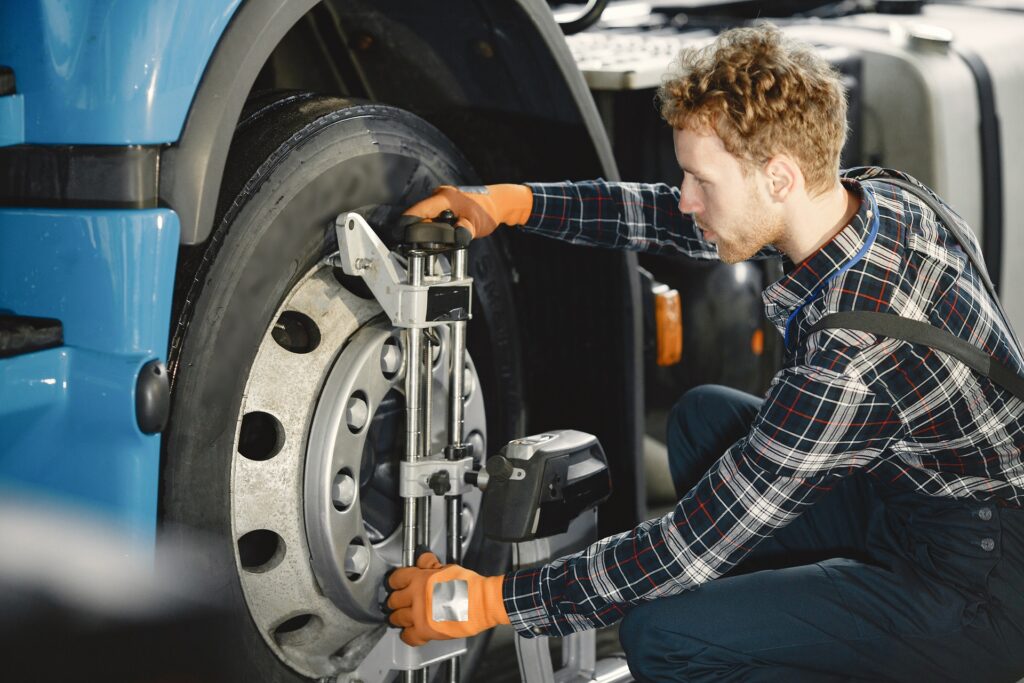
Though often confused, alignment and balancing are separate procedures:
Alignment adjusts the angle of the wheels to ensure they point correctly.
Balancing corrects weight distribution within each wheel and tire using a spinning machine.
Types of Truck & Alignments: What You Might Need
Front-End Alignment
Thrust Angle Alignment
Four-Wheel Alignment
The Dangers of Driving a Misaligned Truck
Excessive tire wear on one side or edge
Reduced traction, especially in wet conditions, can significantly impact the vehicle’s suspension and tire alignment.
Poor fuel economy due to increased rolling resistance can often be linked to improper tire alignment.
Suspension wear, including tie rods and ball joints
Difficulty steering or braking predictably
How Often Should Trucks Be Aligned?
You install new tires
Your truck hits a pothole or curb
You make suspension modifications
Your steering feels off-center
Professional Alignment Services for Trucks in Bakersfield
Full suspension inspection
Computerized angle measurement
Road test and steering feedback adjustment
Alignment of front and rear axles
FAQs
What causes trucks to fall out of alignment?
Do I need a 4-wheel alignment for my truck?
Can poor alignment affect fuel efficiency?
Will alignment fix uneven tire wear?
How long does an alignment take?
Conclusion:
Don’t wait for your tires to tell the story. Be proactive and keep your truck’s alignment in spec. Your vehicle, your wallet, and your safety will thank you.

Leave a Reply